
Every stop during a slow stadium exit generates heat through friction between your brake pads and rotors. In normal driving, brakes get periodic breaks to cool down between uses. During a post game crawl out of a stadium parking structure or a bottlenecked intersection near the entertainment district, brakes are engaged repeatedly with very little time to cool, building up heat far beyond what they experience during a typical commute.
This repeated heat cycling, especially when it happens during just a handful of high traffic events per month, can accelerate wear on pads and rotors more than an equivalent amount of regular city driving would. Drivers who regularly attend games or events, or who simply live in the area and deal with the surrounding congestion on event nights, may find their brakes wearing down faster than the standard maintenance interval would predict, simply due to the concentrated nature of this specific kind of stop and go exposure.
Why Your Transmission Feels The Strain Too
Automatic transmissions rely on smooth, relatively infrequent shifting to operate efficiently and generate manageable heat. The creep and stop pattern typical of stadium exit traffic forces a transmission to shift between drive and a near stop repeatedly over a short period, generating more heat and more mechanical cycling than the same vehicle would experience cruising at a steady highway speed for the same amount of time.
Over time, this repeated stress can contribute to transmission fluid breaking down faster than expected, and in vehicles that are already due for a fluid change, this kind of concentrated heavy use can accelerate a developing issue into a more noticeable problem, such as rougher shifting or delayed engagement when accelerating from a stop.
Signs Worth Watching For After Frequent Event Traffic
If you regularly deal with stadium area congestion, a few signs suggest it may be catching up with your vehicle. Brakes that feel less responsive than usual, a burning smell after a particularly long, slow exit from an event, a transmission that shifts roughly or hesitates when accelerating, or a car that seems to run a bit hotter than normal after sitting in stop and go traffic are all worth having checked. These symptoms tend to show up sooner for regular event attendees than the standard maintenance calendar would suggest, precisely because the wear happens in short, concentrated bursts rather than being spread evenly across normal daily driving.
If your vehicle has ever struggled to start after a long night of idling in stadium traffic, our guide on the top 10 reasons your car won’t start and how to get back on the road walks through many of the common causes, some of which are more likely after extended idling and heat exposure during a busy event night.
Simple Habits For Frequent Event Attendees
Checking your brake fluid and pad thickness a bit more often than the standard schedule suggests is a reasonable precaution if you regularly deal with stadium exit traffic, whether as a season ticket holder or simply someone who lives close enough to the entertainment district to feel the congestion regularly. Having your transmission fluid checked on a slightly accelerated schedule can also help catch a developing issue before it turns into a more expensive repair.
Planning your exit strategy on event nights can also reduce wear indirectly. Waiting even twenty or thirty minutes after a game or concert ends, rather than joining the initial crush of vehicles leaving all at once, often means less time spent in the heaviest stop and go conditions. This is not always practical depending on your schedule, but for anyone who attends events regularly, it is a simple habit that reduces both the frustration of sitting in traffic and the cumulative wear that comes with it.
Allowing your vehicle a bit of extra cooldown time before shutting it off after a particularly long, hot exit from an event can help as well, since this gives fluids and components a chance to circulate a little longer rather than stopping abruptly while everything is still running hot from the extended idle.
Why A Mobile Mechanic Fits This Specific Kind Of Wear Pattern
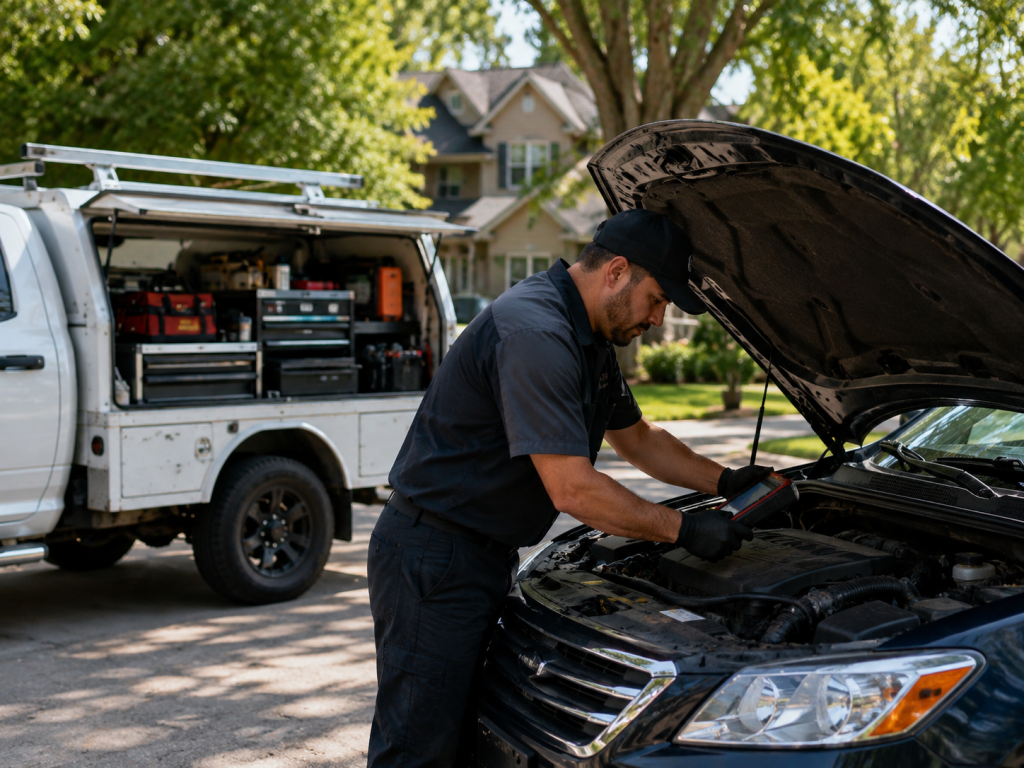
For Arlington residents who deal with event traffic regularly, adding a separate shop visit on top of everything else can feel like one more inconvenience layered onto an already busy schedule around game days. A mobile mechanic can come to your home or office and check brakes, transmission fluid, and cooling system components without requiring you to navigate the same congested roads that caused the extra wear in the first place.
We covered the broader benefits of this approach in our article on why mobile mechanics are better than traditional auto shops in Arlington, which explains how convenience and flexible scheduling come together, particularly useful for residents whose driving patterns are shaped by a busy stadium calendar.
Stay Ahead Of Game Day Wear And Tear
Living near Arlington’s stadiums and entertainment district comes with plenty of perks, but it also means your vehicle deals with a uniquely concentrated form of stop and go wear that a standard maintenance schedule may not fully anticipate. Paying a bit more attention to brakes and transmission health, especially if you regularly attend games or events, is one of the simplest ways to avoid an unpleasant surprise down the road.
If it has been a while since your brakes or transmission fluid were checked, visit our homepage to learn more about our services, or reach out through our contact us page to schedule a visit at your home or office before the next big event fills the parking lots again.
A little proactive attention now can help your car keep pace with everything game day traffic in Arlington asks of it.